


In the second article in his three-part series on the Defective Premises


Marc Glover, Thomas Dawson and Sami Allan examine the recent High Court decision in Plantation Wharf Management Limited & ors v Brady & ors [2025] EWHC 2938 (Ch), which confronted a key issue of construction concerning the articles of association for a resident management company.
This article explores the central dispute over the meaning of “unit of accommodation” and its effect on a freeholder’s ability to retain special privileges, including the power to nominate directors. The case turned on whether retaining garages and storage units was sufficient for the freeholder to maintain control under a “sunset provision” in the company’s articles.
The article details the court’s approach to contractual interpretation, including its application of principles from Arnold v Britton [2015] UKSC 36 and the ejusdem generis rule. It further considers the significant implications of the judgment for property litigation, residential block management and the governance of mixed-use developments, highlighting the critical need for precise drafting in company articles, leases, and other governing documents.
In the recent case of Plantation Wharf Management Limited v Brady, the High Court was confronted with a number of issues relating to the control of the resident management company of the Plantation Wharf Estate (Estate), namely Plantation Wharf Management Limited (Company).
Whilst the case made its way before the Court as a company law injunction, Nicola Rushton KC (sitting as a Deputy High Court Judge) (Judge) observed at paragraph 7(ii) of her judgment that:
“There is a key issue of construction on the Articles, from which much of the real dispute between the parties flows, as it affects who can nominate and be appointed as a director of the Company. This is whether the phrase “unit of accommodation” in Article 4 extends to garages and/or storage units.”
In short, the main question before the Court was whether the freeholder of the Estate maintained its special privileges under the Company’s articles by retaining some garages and storage units (Key Issue). As one might have intuitively guessed, the Court did not accept that a garage or a storage unit was capable of being “a unit of accommodation”. How and why the Court reached this conclusion is the subject of the remainder of this article, after which the authors offer some general pointers as to the significance of this decision for those litigating in the sphere of residential block management.
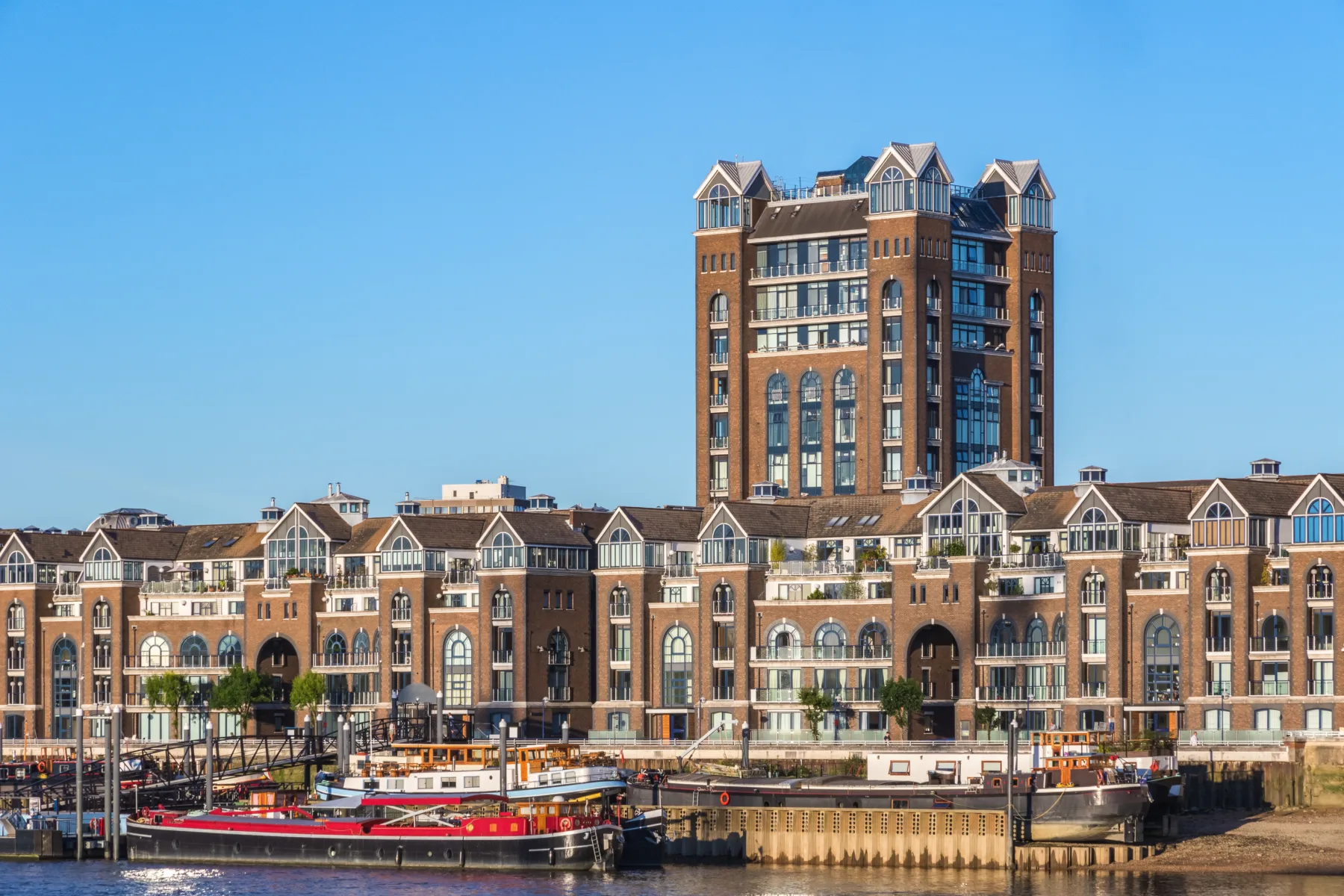
The Estate is a mixed-use development in Battersea, London. From early on in the Estate’s development, it has been managed by the Company. Whilst the Company’s articles have been through several iterations over the years, a significant feature from the outset has been the freeholder’s retained control over certain aspects of the Estate. For instance, the Company’s articles from 2011 provided that:
“Until all the Units…shall have been let to Owners and Subscribers, the freeholders of the Estate from time to time and their respective nominees and personal representatives shall have the power to nominate, remove and replace up to four Directors (in aggregate)…”
In other words, the freeholder retained significant control over the Company in so far as it had the ability to appoint a number of directors to the Company’s board. However, as the keen reader will have noted, such a power was on the condition that all the “units” on the Estate had not yet been let. Plainly, this makes sense. There are good commercial reasons why the freeholder would have wanted to maintain some control over the Estate whilst it was still being built out and sold off. However, it follows that such control would disappear once that objective had been fulfilled. For want of a better word, the requirement in relation to the retention of “units” was, at least from an objective perspective, a sunset provision governing the terms of the freeholder’s control.
But that was not how the freeholder saw things. From their perspective, and as expressed at paragraph 15 of the judgment, the freeholder’s privileges would be maintained so long as they retained garages and storage units on the Estate, as, on their case, this satisfied the definition of “units of accommodation” for the purpose of Article 4 of the Company’s articles.
It was primarily this tension, albeit amongst other things, which led to Ms Brady, the first respondent, organising the service of a requisition notice on the then directors of the Company to, inter alia, remove the freeholder’s power to appoint from the Company’s articles. Whilst a number of interesting company law issues arose from then on, attention will now turn to the Court’s approach to the meaning of “unit of accommodation”.
As a starting point, it is important to note that whilst this case involved the interpretation of the Company’s articles of association, the Judge accepted at paragraphs 43-46 that the principles to be applied were, in essence, the same as those relating to general contractual interpretation. In this regard, the Judge relied on the approach set out by Lord Neuberger in Arnold v Britton [2015] UKSC 36.
Interestingly, however, both the applicants and respondents also sought to utilise the ejusdem generis principle in support of their construction of the term “unit of accommodation”. As explained at paragraph 47 of the judgment, this principle is the idea that:
“Where a phrase such as “other…” appears at the end of a list of specific items, this was usually a “sweep up clause” and should be interpreted as meaning items ancillary or similar to those already listed and limited accordingly.”
The need for both parties to rely on this principle arose from the fact that a “unit” was defined in the Company’s articles as “a flat, office or other unit of accommodation comprised in any property”, and so the critical question before the Court was how far the concepts of a flat or office could be extended.
As set out at paragraph 48 of the judgment, the applicants argued that because “flat” and “office” encompassed both residential and non-residential property, a garage or a storage unit fell within the phrase “unit of accommodation”. Moreover, they also advanced the argument at paragraph 53 that it was within the commercial purpose of the Company’s articles for the freeholder to retain an interest in the management of the Company so long as they retained some financial interest in the Estate, even if that be by way of a garage.
In contrast, the respondent’s primary position was that “flats” and “offices” were, in the context of a “unit of accommodation”, concepts which were concerned with the use of premises by people. This point was noted at paragraph 48 of the judgment, where it was observed that the respondents accepted that the phrase “unit of accommodation” could “extend to types of commercial accommodation which were occupied and used by people, such as a café or restaurant”. Moreover, and as set out at paragraph 52 of the judgment, the respondents also submitted that the restrictive interpretation of the term “unit of accommodation” was more consistent with the purpose of the articles governing the Company which managed the mixed-use Estate.
Having considered both arguments, the Court preferred the respondents’ construction of the Company’s articles by finding that a garage or storage unit was not, in context, capable of being a “unit”. What followed was that the “sunset” provision had taken effect and the freeholder had lost its special privileges under the articles.
In reaching this conclusion, the Judge observed at paragraph 55(i):
“As a matter of natural, literal interpretation,…a “unit of accommodation” would normally be restricted to self-contained spaces which are designed and intended for regular and extended occupation by people…”
Interestingly, and in line with the principles in Arnold v Britton referred to above, the Judge started her reasoning by looking at the natural and ordinary meaning of the relevant words. Such an approach is, as is now well established, the right one. That being said, the Judge also observed at paragraph 55(v) that the applicants’ interpretation of the term “unit of accommodation” appeared to be inconsistent with the general purposes of the Company in relation to the management of the Estate. Nevertheless, it was also noted that the Court’s conclusion as to the Key Issue was predominantly formed by reference to the natural meaning of the words used, as opposed to the commercial implications of the competing constructions.
This decision highlights the need for property management companies to review their governing articles so as to ensure that the company is being properly directed. In this case, and as explained above, the Court found that the freeholder had lost its right to appoint directors to the management company in July 2013, and yet it had continued to influence the decisions of the Company in the following 12 years.
The decision is also an excellent example of the need to carefully consider words and phrases adopted in agreements, within the context of the entire agreement and the situation it is seeking to govern. The principles addressed in the judgment apply to leases, as well as the documents governing leasehold companies.
Further, the decision provides a view on the meaning of “accommodation” and “units of accommodation” in the context of mixed-use developments and premises intended to be occupied by people. These words are not uncommon in the sphere of landlord and tenant relationships or leasehold management, and in light of the number of residential and mixed-use developments similar to Plantation Wharf, it is likely that the decision will be of use to other leasehold estates when considering their agreements, company articles and other governing documents.
This article was first published in the Practical Law’s Property Litigation Column.
This content is provided free of charge for information purposes only. It does not constitute legal advice and should not be relied on as such. No responsibility for the accuracy and/or correctness of the information and commentary set out in the article, or for any consequences of relying on it, is assumed or accepted by any member of Tanfield or by Tanfield as a whole.

In the second article in his three-part series on the Defective Premises

Andrew Butler KC and Richard Alford achieved an important success in an appeal which