
The programme for Reform, Risk and Opportunities: the Changing Property Law Landscape is now


Philip Rainey KC and Rhys Duncan examine the important decision of the Court of Appeal in 14 Park Crescent Limited and another v 14 Park Crescent RTM Co Limited [2026] EWCA Civ 712.
14 Park Crescent, which was heard alongside Courtyard RTM Co Ltd v Rockwell (FC103) Ltd, addresses section 72(3) of the Commonhold and Leasehold Reform Act 2002 (“the 2002 Act”) and the definition of a self-contained part of a building for the purposes of Right to Manage (“RTM”). In particular, the court addressed the vertical division and independent redevelopment limbs in section 72(3)(a) and (b) of the 2002 Act.
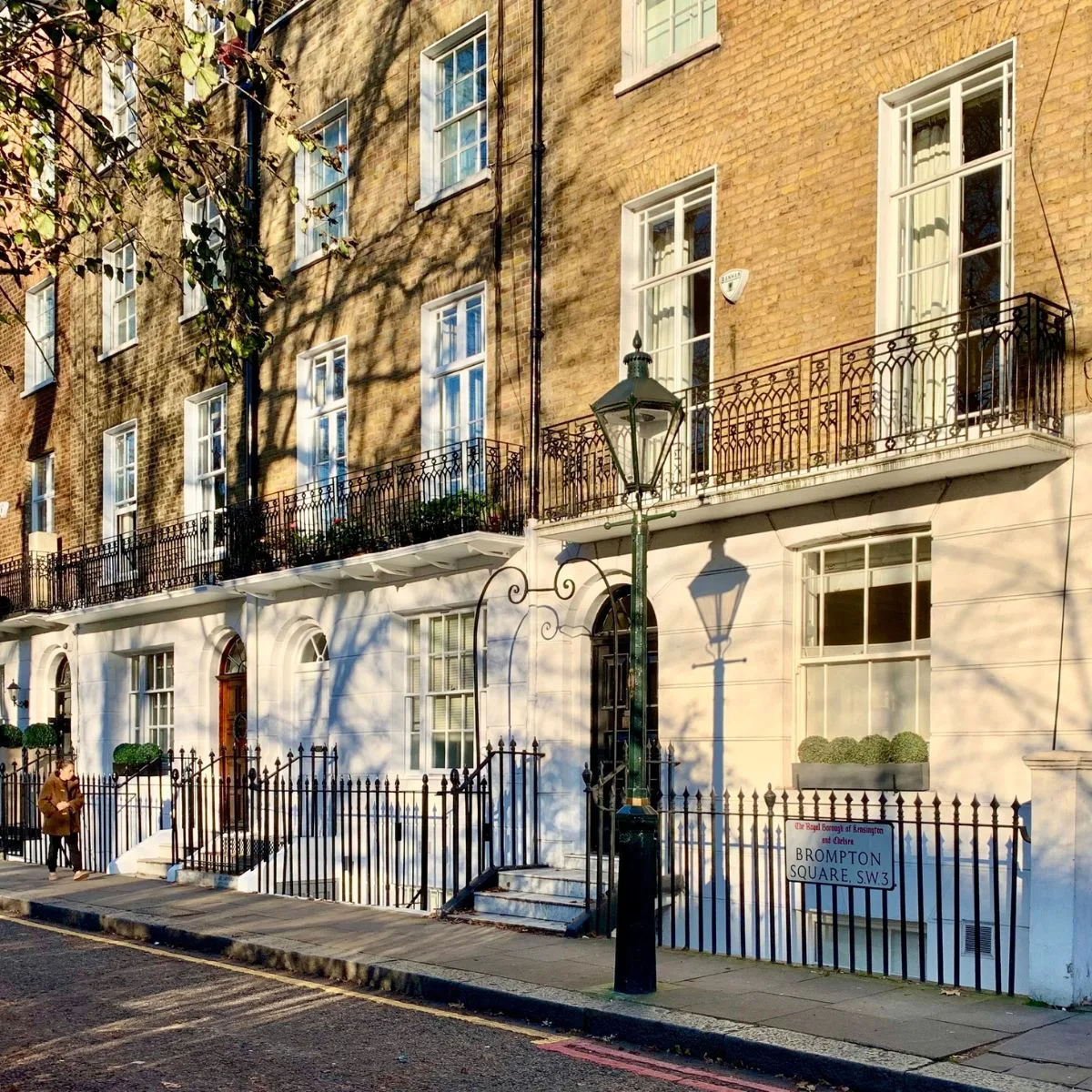
14 Park Crescent (“No.14”) is situated within a row of Georgian terraced houses. Following a varied history of residential usage, substantial damage during the Second World War, and then a stint as part of the Bloomsbury and Marylebone County Court (later Central London County Court), No.14 was redeveloped (as part of a wider redevelopment of the Crescent) into six flats within the main building, and an additional three flats within the mews behind. The freehold is owned by the Crown, with the two Appellants each holding intermediate leases of No.14. Each flat is then held on an individual long lease.
During the redevelopment between 2012-2018, No. 14 was almost entirely demolished, leaving only the front façade and its steel and concrete frame. The works also included the creation of deeper and wider foundations that extended beneath the party walls on each side of No. 14.
RTM was claimed under the 2002 Act on the basis that No.14 was a self-contained part of a building. The Crown as freeholder did not raise any challenge, although the two intermediate landlords disputed both the vertical division of No.14, and the ability to redevelop it independently of the remainder of the terrace.
Plaza Boulevard, the subject of the Courtyard claim, consists of a series of five blocks, each of which is structurally attached to both a central concrete podium and an underground car park which serves all of the blocks and is undivided. RTM was sought separately over three of the five blocks, The Courtyard, The Studios, and The Terrace.
It was accepted that each block was not a self-contained building as they lacked structural detachment, and RTM was therefore sought on the basis that each of the three blocks was a self-contained part of a building. Challenges were again raised both in relation to the vertical division of the blocks, and the ability to independently redevelop them.
In dealing with 14 Park Crescent, the FTT held that the property was sufficiently vertically divided by the party walls within the terraced structure, and that the shared foundations did not impair this. In responding to a challenge raised in relation to overhanging balconies, the Tribunal also found that it was not a requirement that the vertical division consists of a single straight vertical line without deviation.
In relation to Courtyard the FTT took a different approach. The Tribunal decided that the horizontal concrete slab at basement level prevented a vertical division because it was continuous and not divided along the lines of the steel frames of the blocks.
On appeal from the FTT, the two appeals were heard together by the UT. The FTT’s decision in 14 Park Crescent was upheld by the UT on appeal. It was specifically found that the redevelopment test did not assume the complete demolition of the premises, nor did it mean that redevelopment must be possible without the consent, agreement, or support of neighbouring properties, or without impacting those properties.
In respect of Courtyard, the UT disagreed with the FTT on the issue of the concrete basement slab preventing a vertical division. The Tribunal held instead, as in relation to 14 Park Crescent, that a solid structure running perpendicular to the notional vertical division line does not prevent an appropriate vertical division. The line is, after all, a notional one. However, the UT found that the undivided underground car park did prevent a vertical division, that the premises in the basement could not be considered self-contained in the ordinary meaning of the word, and therefore none of the blocks was a self-contained part of the building.
The Court of Appeal’s decision notes, as a general matter, the interrelationship between section 72 of the 2002 Act and the substantially similar test in section 3 of the Leasehold Reform, Housing and Urban Development Act 1993 (“the 1993 Act”). The position set out in Eveline Road RTM Co Ltd v Assethold Ltd [2024] EWCA 187 that caselaw addressing one statute is relevant to the interpretation of the other was expressly affirmed.
On the substantive issues, the Court of Appeal upheld the UT’s decisions in both appeals. Beginning with “vertical division”, the court confirmed that the test is a strictly physical one, and is not concerned with ownership of land. The fact, for example, that No. 14’s foundations extended beyond what was being claimed within the RTM (because following the redevelopment they span under the party walls) did not prevent the building being vertically divided. Whether or not some of No.14’s foundations were outside of the scope of the RTM was not an issue of physical division or self-containment. Equally, the court affirmed the UT’s view that there is no difficulty in the notional vertical line going through a physical feature such as a party wall or foundation, or in that notional line containing dog legs and not being perfectly straight.
It is a pre-requisite of a vertical division, however, that the property in question is actually divided in such a way. On this issue the court drew a distinction between the vertical division limb and redevelopment limb, the former of which requires an actual vertical division; the latter a hypothetical determination that redevelopment would be possible. The Court of Appeal therefore agreed with the UT that a shared basement car park that was not physically divided could not satisfy the requirement of being self-contained, or being “divided” vertically, in the absence of any actual division or self-containment.
Consideration was also given to the decision in FirstPort Property Services Ltd v Settlers Court RTM Co Ltd[2022] UKSC 1. The RTM scheme was not generally intended to provide for common management, particularly where there is an inherent difficulty in requiring different parties to share management of, in this case, an undivided parking facility. It is appropriate, in the Court of Appeal’s view, to give weight to these practical difficulties when construing and applying section 72.
Therefore, whilst 14 Park Crescent was vertically divided and sufficiently contained, notwithstanding the horizontal plane of the foundations, the three blocks in Courtyard could not be either divided or self-contained in the absence of division or containment at a basement level.
Addressing the issue of independent redevelopment more briefly, the court held that the test asked simply whether a hypothetical scheme of works on part of the building would be sufficient to amount to redevelopment, and whether it could be done without redeveloping the wider building. The test concerns the building and its structural features, and was not a more general test of whether others would be impacted or affected by that development.
It was also held that when considering a hypothetical redevelopment, there is no requirement that every part of the structure must be removed. The question is one of fact and degree, which may be satisfied by something less than a total demolition and reconstruction of the part of the building in question. The Court of Appeal also rejected the notion that the necessity of temporary supports during any redevelopment would mean that the test could not be satisfied.
The clear statements setting out the correct interpretation of the self-containment test are of particular significance both within the context of RTM, and, in light of the alignment between the 2002 Act and 1993 Act, the realm of enfranchisement. Practitioners should also note the similarities between those statutes and the Building Safety Act 2022, and, perhaps most interestingly, the draft Commonhold and Leasehold Reform Bill 2026 which also includes a ‘self-containment’ test.
Philip Rainey KC was instructed by Wallace LLP for 14 Park Crescent RTM Co Limited, the successful Respondent in the Court of Appeal.
James Fieldsend was instructed by Wallace LLP for 14 Park Crescent RTM Co Limited, the successful Respondent in the Upper Tribunal.
Robert Bowker was instructed by Wallace LLP for 14 Park Crescent RTM Co Limited, the successful applicant (as they were at that stage) in the First-tier Tribunal.
This content is provided free of charge for information purposes only. It does not constitute legal advice and should not be relied on as such. No responsibility for the accuracy and/or correctness of the information and commentary set out in the article, or for any consequences of relying on it, is assumed or accepted by any member of Tanfield or by Tanfield as a whole.
The programme for Reform, Risk and Opportunities: the Changing Property Law Landscape is now
The Renters' Rights Act 2025 represents one of the most significant reforms of residential